Mail-Order Medicine: Which At-Home Health Tests Earn Their Place in 5285—and Which Belong in the Trash
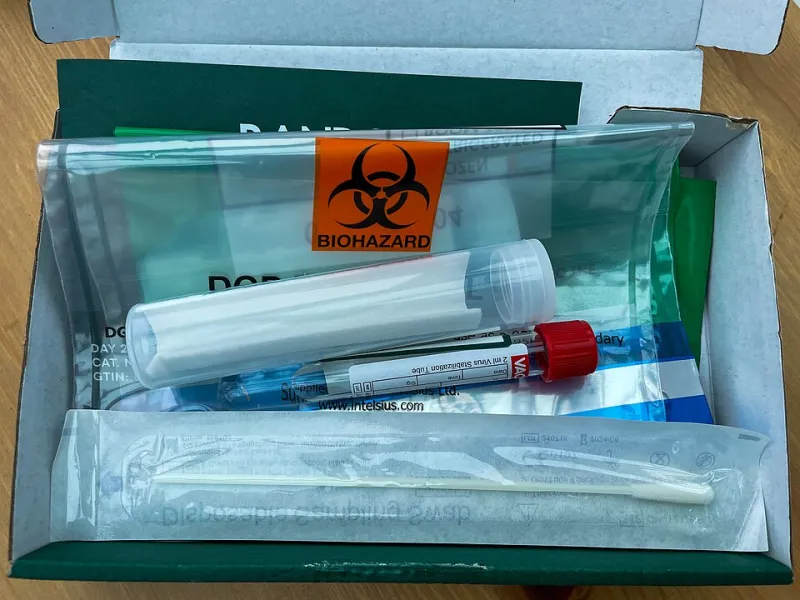
Photo: Photograph by Mike Peel (www.mikepeel.net)., CC BY-SA 4.0, via Wikimedia Commons
The shelf space tells the story. Where pharmacies once stocked only pregnancy tests and glucose meters, aisle ends now advertise colon cancer screening, hormone panels, and—more dubiously—food 'sensitivities,' all mailed to your door. The direct-to-consumer lab market has grown into a multi-billion dollar industry, and 2025's offerings range from genuinely lifesaving to frankly worthless.
The team at DxLine reviewed the major categories with a simple framework: Is the test scientifically validated? Is the result actionable? And does a positive or abnormal result still require a physician's confirmation? Here is where popular kits land.
Worth Buying
1. FDA-Approved Stool-Based Colon Cancer Screening
Kits such as Cologuard and the FIT test screen for colorectal cancer, the third most common cancer in American adults. FIT tests detect hidden blood; multi-target stool DNA tests also look for genetic markers. Both are endorsed by the US Preventive Services Task Force as screening options and are typically covered by insurance for average-risk adults over 45.
The catch: a positive result is not a diagnosis. It means a colonoscopy is needed—roughly half of positive multi-target stool tests do not reveal cancer or advanced precancerous lesions. Used correctly, as a screening step rather than a final answer, this is the most valuable product in the category.
2. FDA-Cleared Home HIV Tests
The OraQuick In-Home HIV test, an oral-fluid test cleared by the FDA, delivers a reliable result in about 20 minutes. For individuals who face barriers to clinic-based testing, it is a public health tool of real consequence. Any reactive result requires confirmatory laboratory testing, which the manufacturer's support line will help arrange.
3. Home A1c and Lipid Panels
Fingerstick tests measuring average blood sugar (HbA1c) and cholesterol offer legitimate value for people managing known conditions between doctor visits, particularly those without easy access to a lab. Accuracy is reasonably good on CLIA-waived devices. Treat results as trend data, and confirm any significant change with a venous blood draw at a laboratory.
4. Urinary Tract Infection Tests With Telehealth Follow-Up
Several services now pair dipstick testing with a same-day telehealth consultation and, where appropriate, a prescription. The dipstick itself is imperfect, but the bundled model—test, consult, treat—reflects how these products should work. Avoid kits that sell results with no clinician in the loop.
5. Thyroid TSH Screening
A simple TSH test can reasonably flag an underactive or overactive thyroid in someone with suggestive symptoms—fatigue, weight change, temperature intolerance. It is a screening tool only; abnormal results require a full panel (free T4, TPO antibodies) interpreted by a clinician.
6. Blood Type Testing
Low stakes, inexpensive, and occasionally useful for personal knowledge—though it should never be considered definitive for medical purposes such as pregnancy or transfusion planning.
7. Vitamin D Testing
Modest value. For most healthy adults, routine vitamin D testing is unnecessary, but for people with limited sun exposure, dark skin living at northern latitudes, or malabsorption conditions, a baseline level can guide supplementation. Interpret results against current Endocrine Society guidance, not the kit's marketing copy.
Skip These
1. Food Sensitivity (IgG) Kits
This is the clearest skip in the market. IgG antibodies to foods largely indicate exposure—you ate the food—rather than intolerance or allergy. Major allergy and immunology organizations, including the AAAAI, advise against IgG testing for diagnosing food sensitivity. Genuine food allergies are diagnosed through skin prick testing, specific IgE blood tests, and supervised oral challenges. Eliminating dozens of foods based on these kits risks unnecessary restriction and, in children, nutritional harm.
2. Full 'Wellness' Panels With 50+ Biomarkers
Comprehensive panels sound thorough and mostly generate noise. Testing dozens of markers in a healthy person guarantees some fall slightly outside reference ranges by chance alone, producing anxiety, repeat testing, and occasionally cascades of follow-up procedures for findings that meant nothing.
3. Consumer Genetic Tests Claiming to Predict Disease Risk From Limited Markers
Reputable services like 23andMe carry FDA authorization for a small number of specific pharmacogenetic and risk variants. But broad 'genetic wellness' reports built on weak associations should not drive medical decisions. If hereditary disease is a genuine concern—say, a strong family history of breast or colon cancer—seek genetic counseling and clinically validated testing instead.
4. Hormone 'Optimization' Panels Marketed for Fatigue or Weight Loss
Direct-to-consumer testosterone, cortisol, and 'metabolic hormone' panels sold alongside supplement subscriptions represent a conflict of interest in kit form. Hormone interpretation depends on timing, assay quality, and clinical context. Salivary cortisol panels in particular lack the reliability needed for any diagnosis, including adrenal insufficiency.
The Common Thread
Every worthwhile at-home test shares two features: it screens for a condition with an accepted, evidence-based follow-up pathway, and it connects you to a clinician when results demand one. Products that skip the clinician, overpromise certainty, or funnel you toward a purchase do not belong in your medicine cabinet.
Home testing is best understood as an extension of the diagnostic line, not a shortcut past it. The kit on your countertop can start the process. Only a clinician can finish it.