The Vanishing Consultation: Why the Diagnosis You Waited Months For Can Fade by the Time You Reach Your Car
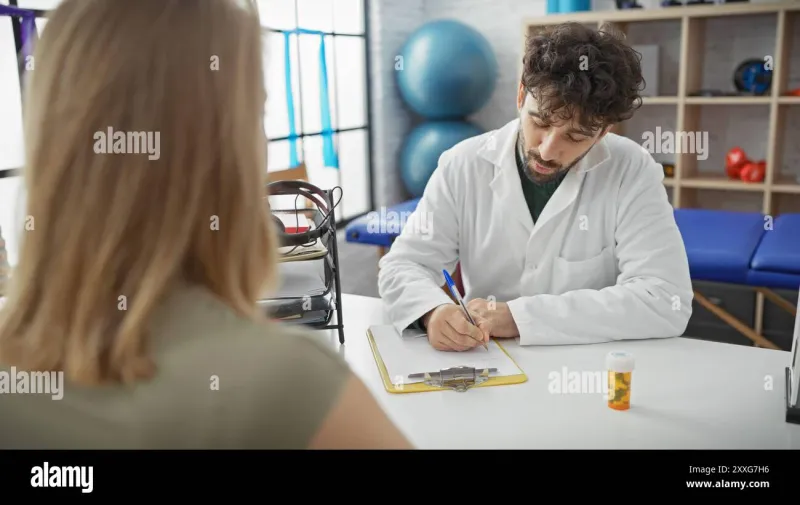
Photo: patient writing notes during doctor consultation exam room, via c8.alamy.com
An Answer That Doesn't Stick
A patient can wait six weeks for a specialist appointment, rehearse symptoms in the waiting room, and sit through fifteen minutes of careful explanation—then walk to the parking garage unable to recall the diagnosis, the medication name, or the follow-up plan. This is not carelessness. It is a well-documented feature of human cognition under stress, and it has a measurable cost: missed follow-ups, unfilled prescriptions, and avoidable repeat visits.
Research on physician-patient communication consistently finds that patients retain roughly 40 to 80 percent of the information delivered in a clinical encounter, with comprehension dipping further as the volume of information rises and as the emotional stakes climb. A diagnosis of a serious condition can cut recall dramatically. The moment a physician says the word that changes everything, attention narrows, and the sentences that follow often never register.
What Overwhelm Does to Memory
The mechanics are straightforward. When people hear distressing news, the brain's threat response competes directly with the working memory needed to encode new information. Clinicians call the phenomenon "diagnostic overwhelm," and it produces a predictable pattern: patients remember the emotional tone of the visit—whether the doctor seemed hurried, whether the news felt grave—while the clinical specifics, dosages, and next steps slip away.
Anxiety compounds the problem in a second way. Patients under stress are less likely to ask clarifying questions and more likely to nod along, creating an illusion of understanding that collapses later. Studies of informed-consent conversations show patients frequently overestimate how much they understood at the time.
Techniques That Hold Up Under Pressure
Not every memory aid is equal. A few have earned solid evidence behind them:
-
Teach-back. The single most validated method. The patient repeats the plan in their own words—"So I'm starting the medication Tuesday, and I get bloodwork in two weeks?"—and the physician corrects any drift. Clinics that build teach-back into their workflow see measurably fewer errors in adherence.
-
Anchoring to a written summary. An after-visit summary in the patient portal, however dry, gives the memory something to reconstruct from. Patients who review their visit notes—now available by federal rule at virtually every US health system—report better recall and better follow-through.
-
A second listener. A friend or family member in the room hears what the patient cannot. Two imperfect memories, compared afterward, recover far more than one.
-
Recording the visit, where permitted. In most states, patients may record a clinical conversation with the physician's consent, and a growing number of health systems now offer automated visit-recording tools that generate an AI summary. Policies vary, so ask before the appointment rather than after.
Preparing Before the White-Coat Moment
The strongest intervention happens before anyone says a word. Patients who arrive with a written list of questions—three to five, ranked by importance—consistently report more satisfying visits and better recall. The list externalizes the working memory that stress would otherwise consume.
Practical preparation looks like this: write the questions down and bring the paper; bring a notebook or designate a note-taking app; recruit a second set of ears and tell them, in advance, what to listen for; and decide before the visit that you will ask the physician to slow down or repeat anything you miss. Physicians, surveys show, generally welcome these requests—it signals engagement, not distrust.
One more habit worth forming: before leaving the exam room, ask directly, "Can you write down the diagnosis and the next steps?" A thirty-second request at the end of the visit spares weeks of reconstructing from fragments.
When the Answer Does Evaporate
Even with preparation, some details will be lost, and the recovery path matters. The patient portal's visit summary is the first stop. A call to the practice's nurse line can clarify a medication instruction without a new appointment. And if the diagnosis itself remains unclear—if the visit ended in a fog of unfamiliar terms—requesting a brief follow-up call is a reasonable, routine ask, not a burden. Most practices build such calls into their schedule.
The diagnostic line does not end when the physician finishes speaking. It ends when the patient can state, in their own words, what was found and what happens next. Anything short of that is a conversation still in progress.