Ghost Notes: The Diagnosis That Follows You From Visit to Visit

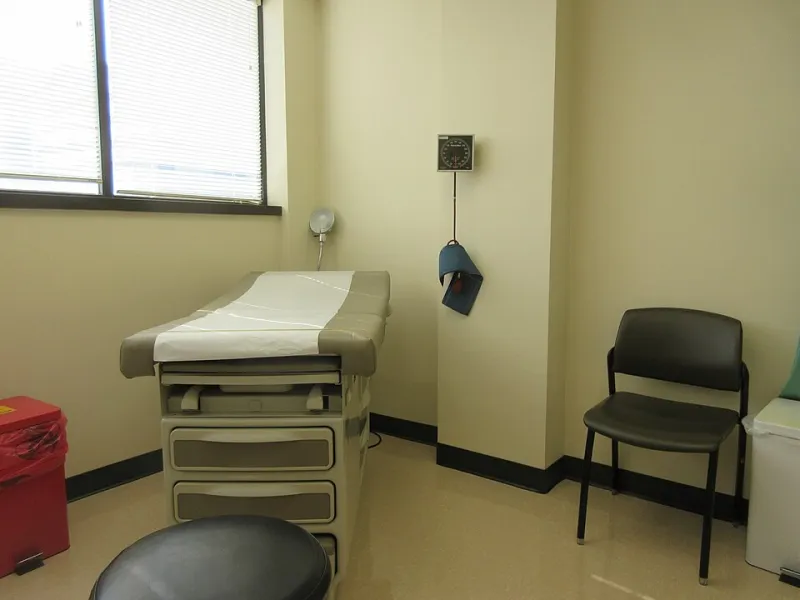
Photo: leandro mazzochi, CC BY 2.0, via Wikimedia Commons
Somewhere in a server, likely in a data center in the Midwest, there is a paragraph about you that your doctor may not have written. It describes your medical history, your medications, perhaps a diagnosis. It appeared in your chart months or years ago, and it has been reproduced, word for word, into every note since. Clinicians have a name for this phenomenon: the copied-forward note. Patients rarely hear the term—but they live with its consequences.
How a Note Becomes a Ghost
Modern electronic health record (EHR) systems—Epic, Cerner, and their competitors—reward efficiency. A physician seeing twenty patients in a day can pull up yesterday's note, click "copy," and edit. Used honestly, this feature saves typing. Used carelessly, it manufactures fiction.
Research published in journals such as the Journal of the American Medical Informatics Association has found that copy-forward functions appear in a substantial share of primary care notes, and that copied text is associated with documentation errors, outdated medication lists, and—most consequentially—diagnoses that persist without anyone re-verifying them. A clinician who once wrote "rule out hypothyroidism" may find that phrase fossilized into an active problem-list entry. Three years later, a new physician reads it, assumes it was confirmed, and treats it as fact.
This is how a suspicion hardens into a record. The chart, which is supposed to be a living account of your health, becomes a chain of photocopies.
Why It Matters More Than You Think
A carryover diagnosis is not a cosmetic flaw. It shapes decisions downstream:
- Insurance and disability claims. A diagnosis in your problem list can trigger denials, premium adjustments, or audits.
- Future triage. An emergency department physician seeing "chronic back pain, non-surgical candidate" may order fewer tests than the situation warrants.
- Specialist referrals. A note describing symptoms that have long since resolved can steer a specialist's entire evaluation.
- Medication reconciliation. Copied-forward med lists are a well-documented source of prescribing errors.
The clinical literature calls this "note bloat"; patients experience it as something simpler—being treated for a version of themselves that no longer exists.
Five Places Errors Hide
When you review your chart through your patient portal, look closely at these sections, where inherited language collects:
- The Problem List. This is the master ledger of your diagnoses. It should contain only active, verified conditions.
- History of Present Illness. If your note describes an event from 2019 in the present tense, you are reading copied text.
- Medication List. Doses that changed, drugs you stopped years ago—these often survive indefinitely.
- Social History. A "former smoker" designation that never updates can affect risk calculations.
- Assessment and Plan. Old conclusions restated as current ones are the most dangerous carryover of all.
Your Correction Playbook
Federal law gives you leverage. Under the Health Information Technology for Economic and Clinical Health (HITECH) Act and the 21st Century Cures Act, patients have the right to request amendments to their medical records. In practice:
- Submit a written amendment request to your provider's medical records department (often called Health Information Management). Be specific: identify the note, the date, and the inaccurate statement.
- Request a note addendum rather than deletion. Records are legal documents; corrections are typically appended, not erased. An addendum from the original author—"Diagnosis was never confirmed; patient reports resolution of symptoms"—carries real weight.
- Escalate if denied. If a practice refuses a legitimate correction, you may submit a statement of disagreement that must be kept with the record.
- Flag it verbally at every visit. Say plainly: "I see a diagnosis in my chart that I don't believe was ever confirmed. Can we address that today?" Physicians can and do remove items from problem lists when prompted.
A Culture Problem, Not Just a Technical One
It would be convenient to blame software. The truth is more uncomfortable: copy-forward thrives because clinicians are measured on throughput, not documentation accuracy. Surveys of physician burnout have repeatedly identified EHR documentation burden as a leading contributor. The ghost note is what happens when a system optimizes for the clinician's clock instead of the patient's record.
Some health systems are pushing back—auditing problem lists, training residents to write notes from scratch, and building alerts for diagnoses that have not been re-verified in twelve months. Adoption is uneven. Until it becomes standard, the person with the strongest incentive to catch an inherited error is the one the chart is about.
The Bottom Line
Your medical record is a story that gets retold at every appointment. Occasionally, the retelling drifts from the truth. Read your chart the way you would read a credit report—annually, skeptically, line by line. The diagnosis that follows you from visit to visit should be one a human being actually made, not one a copy-paste button invented.