Sorted by Severity: What Triage Nurses Know Before You Sit Down
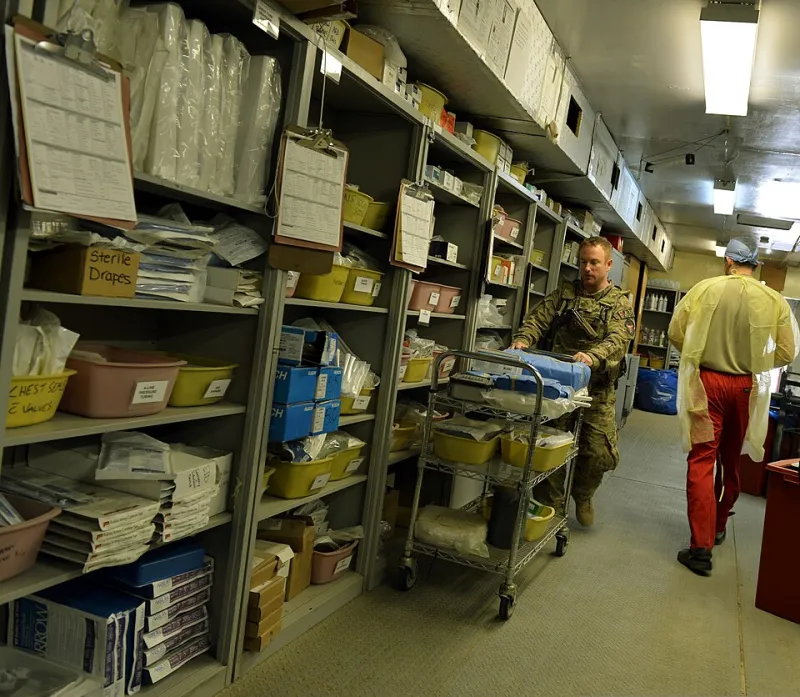
Photo: SSgt Stephenie Wade, Public domain, via Wikimedia Commons
Every American emergency department runs on a quiet paradox: the patients who are seen fastest are often the ones in the most danger, which means a long wait in the lobby—while miserable—can be a signal that your situation is stable. Understanding the sorting machinery behind that paradox changes how you experience the waiting room, and it can help you use it well.
The Five-Tier Logic Behind the Curtain
Most US hospitals use some version of the Emergency Severity Index (ESI), a five-level triage scale refined with support from the Agency for Healthcare Research and Quality. A triage nurse—typically a registered nurse with emergency experience—assigns each arrival a level within minutes of walking through the door:
- Level 1 requires immediate life-saving intervention: cardiac arrest, unresponsive trauma, severe respiratory failure.
- Level 2 signals high risk—chest pain with red flags, stroke symptoms, suicidal intent, an infant with a fever. These patients are roomed quickly, though not instantly.
- Level 3 covers patients who are stable but likely to need multiple resources: imaging, labs, an IV, a specialist consult.
- Levels 4 and 5 are the stable, predictable visits—stitches, a prescription refill, a sprained ankle—needing one resource or none.
The system is deliberately resource-aware, not just symptom-aware. A broken wrist in an otherwise healthy adult is a Level 4; the same injury in a patient on blood thinners with a head strike becomes something else entirely. Context, not the complaint alone, drives the number.
Why the Waiting Room Is a Diagnostic Instrument
Triage is not a single decision made once. It is a rolling assessment. A patient sitting quietly for an hour with stable vitals is, in a sense, passing a continuous test—clinicians call this a reassuring trajectory. The 20-minute wait for chest pain that arrived an hour ago and has not changed often reflects that the initial screen, including an EKG, found nothing immediately threatening.
Conversely, deterioration changes everything. If your pain escalates, your breathing worsens, or you develop new symptoms while waiting, say so immediately. Nurses re-triage patients constantly, and a changed symptom is new clinical information, not an annoyance.
What Patients Can—and Cannot—Do
There is a limit to how much lobbying can move you up the list, and that limit exists for good reason: the person next to you might be waiting because someone else's lobbying moved them. Still, you can help the system sort you correctly.
Be precise and specific. "I've had crushing chest pressure for 40 minutes, it radiates to my left arm, and I take a statin" gives the triage nurse far more than "I don't feel good." Specificity is what acuity scales are built from.
Lead with red-flag language when it is true. Words like "worst headache of my life," "numbness on one side," "slurred speech," or "I'm thinking about hurting myself" are recognized triggers for expedited evaluation. Never manufacture them—but never soften them, either.
Bring a current medication list and note when symptoms started. Time of onset matters enormously for stroke and heart care, and it is the detail patients most often forget.
Understand that re-triage flows both ways. If you have been waiting four hours with a genuine fever of 103°F and a new confusion, ask the triage nurse to recheck you. That is appropriate. Shouting at registration staff is not—it delays everyone, including you.
When the ER Is the Wrong Door
A significant share of emergency visits—for rashes, mild flu, medication refills, routine blood pressure checks—could be handled faster and cheaper elsewhere. A sensible rule of thumb: the emergency department is for anything that could plausibly be Level 1 or 2, or that your primary care physician cannot evaluate same-day. Urgent care handles the middle band. Telehealth handles the rest, and often within the hour.
If you do arrive and it becomes clear your issue is minor, leaving against advice after being triaged is legal—though the safer move is telling the triage nurse, who can route you to urgent care or fast track rather than leaving you in a queue you no longer need.
The Bottom Line on the Line
Triage is best understood as the first diagnostic test you receive, performed by a human being in ninety seconds with incomplete information. It is imperfect, occasionally wrong, and constantly revised. Your job is not to beat it but to feed it accurately—and to trust that being asked to wait is, more often than not, the system's quiet way of saying you are going to be all right.