When the Expert Is a Click Away: An Honest Accounting of Online Second Opinions

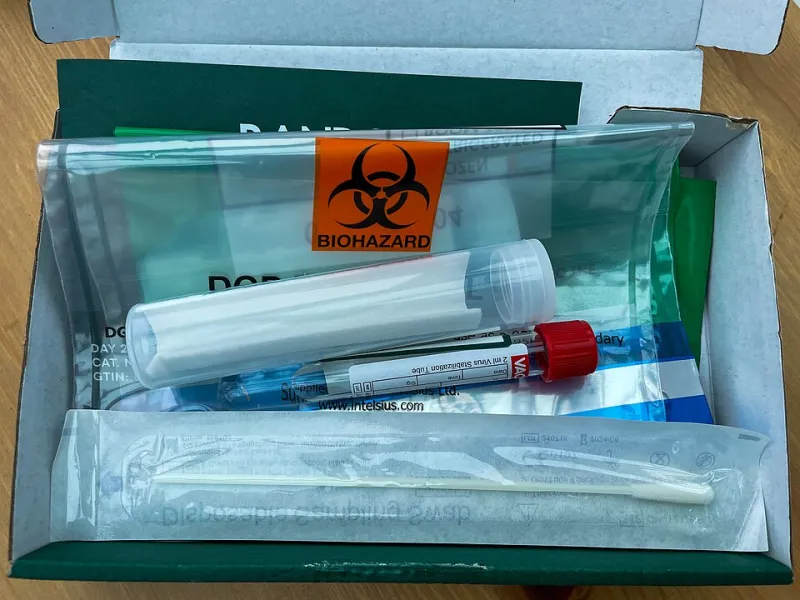
Photo: Frédéric BISSON from Rouen, France, CC BY 2.0, via Wikimedia Commons
The second opinion used to require a referral, a waiting room, and often a plane ticket. Today, a patient in rural Montana can submit her pathology slides to a major academic center and receive a written assessment from a subspecialist within a week — no travel required. The market for these services has expanded rapidly, spanning hospital-run programs, dedicated platforms, and app-based consults. But convenience and clinical value are not the same thing, and patients deserve a clearer-eyed view of where the remote model shines and where it quietly falls short.
The Landscape, Briefly
Online second opinions generally fall into three tiers.
Academic medical center programs — offered by institutions such as the Cleveland Clinic, Mayo Clinic, and several major cancer centers — pair patients with subspecialists who review the existing record: imaging, pathology, operative notes, lab work. These typically cost between several hundred and a few thousand dollars, are rarely covered by insurance, and produce a formal written report.
Dedicated platforms aggregate physicians across specialties, often with faster turnaround and somewhat lower prices, though the depth of review varies by service.
App-based consults offer quick video or messaging exchanges at low cost. These are better understood as convenient consultations than as rigorous second opinions; fifteen minutes with a physician who has never seen your imaging is a conversation, not a case review.
What Remote Opinions Genuinely Do Well
The strongest use case is diagnostic uncertainty in rare or complex conditions. Pathology and radiology are, to a striking degree, re-readable from anywhere. If a biopsy interpretation hinges on whether a tumor has a particular subtype, a second pathologist's eyes on the same slides can change a treatment plan entirely — and studies of second-opinion programs have found that a meaningful share of diagnoses are revised on expert review.
The model also excels at access. For patients hours from a major medical center, or those facing a high-stakes decision (surgery, chemotherapy, an implanted device) where the stakes justify the fee, a written expert review is a reasonable and often worthwhile investment. There is also an underappreciated benefit in the report itself: a well-documented opinion gives patients a concrete artifact to bring back to their local team, sharpening the conversation on all sides.
Where the Model Breaks Down
Honesty requires cataloging the limits.
No examination. Much of medicine happens at the bedside — a palpable mass, a gait abnormality, a neurological sign that only hands-on testing reveals. A remote reviewer sees only what was documented, and documentation is always incomplete. For conditions where physical findings drive the diagnosis, the remote opinion is structurally handicapped.
Garbage in, opinion out. A remote review is only as good as the record submitted. Missing outside imaging, unexplained lab discrepancies, or an incomplete history can produce a confident-sounding opinion built on a skewed foundation.
No continuity. The reviewing expert renders an opinion and exits. Someone still has to implement it, reconcile it with local findings, and manage follow-up — work that falls to a physician who may feel justifiably cautious about acting on advice given without an exam.
Turnaround and cost are not always aligned with urgency. Some programs quote two to three weeks. For an aggressive malignancy, that delay may be clinically consequential, and patients should ask about expedited timelines before paying.
A Practical Decision Framework
Consider paying for a remote second opinion when:
- You have received a serious or rare diagnosis, particularly one where pathology or imaging interpretation drives treatment.
- You are weighing a major, irreversible intervention.
- Your local options are limited by geography or subspecialty availability.
- Your diagnosis has stalled — symptoms persist, testing has been inconclusive, and a fresh expert read of the existing data could break the logjam.
Insist on an in-person evaluation when:
- The diagnosis depends on physical examination.
- You have not yet established care with any specialist at all — a second opinion presupposes a first.
- You need ongoing treatment management, not just an assessment.
- The situation is urgent enough that waiting for a written report would compromise care.
The Bottom Line
Online second opinions are neither a gimmick nor a panacea. Used well — for complex, record-driven questions, with a complete file submitted and results brought back to your treating physician — they are one of the more genuinely useful innovations telehealth has produced. Used as a substitute for examination and continuity of care, they promise more than they can deliver. The line between the two is exactly the kind of thing patients should draw before they click, not after.