The Camera Doesn't Palpate: Where Telehealth Diagnosis Reaches Its Limit
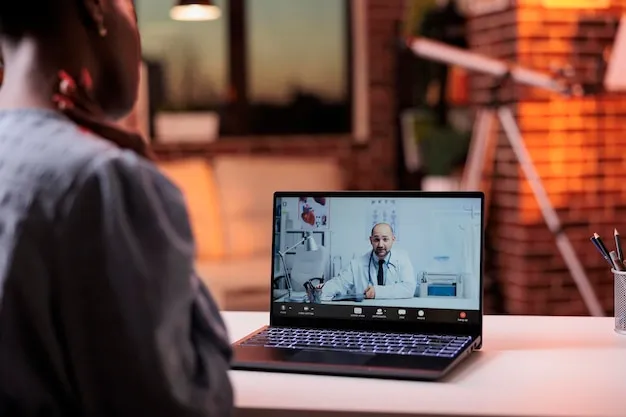
Photo: doctor video call telehealth laptop medical consultation, via img.freepik.com
Telehealth arrived in American medicine as a convenience and stayed as a fixture. Millions of video visits are now billed through Medicare and commercial plans each year, and for good reason: follow-ups, medication refills, mental health counseling, and routine check-ins often work perfectly well through a screen. But at DxLine, our focus is the path to diagnosis — and it is worth being honest about where that path cannot be traveled remotely.
What a Video Visit Actually Sees
A telehealth encounter gives your clinician two channels: what you say and what the camera shows. That is a meaningful but limited data set. A traditional office visit adds an entire layer of information that no webcam can replicate.
Consider what is quietly absent from a virtual appointment:
- Auscultation. A stethoscope reveals heart murmurs, crackles in the lungs, and bowel sounds. Patients can buy digital stethoscopes for home use, but most do not, and interpretation requires training.
- Palpation. Pressing on the abdomen to find tenderness, feeling for an enlarged liver, checking whether a lymph node is firm or mobile — these hands-on findings drive countless diagnostic decisions.
- Instrument exams. Otoscopes, ophthalmoscopes, and throat swabs require physical proximity. A red eye on camera is not the same as a visualized eardrum.
- Vital signs. Home cuffs and pulse oximeters help, but many patients lack them, and readings taken in a clinical setting are more reliable.
- Imaging and labs on demand. A video visit can order an X-ray, but the ordering is only as useful as the follow-through.
The Conditions Most Often Missed Through a Screen
The failure mode of telehealth is rarely dramatic. It is usually a subtle finding — a faint murmur, mild peritonitis, a skin lesion that looks benign at 1080p — that goes unexamined because the exam never happened. Abdominal pain is the classic example: the difference between gas and appendicitis often comes down to a physical exam and, when needed, a CT scan. Similarly, a persistent cough may look identical on video whether it stems from reflux, asthma, or an early pneumonia.
Dermatology is a partial exception — store-and-forward photo review is genuinely effective — but even there, a lesion's texture and depth matter, and dermoscopy requires in-person equipment.
A Practical Checklist: Symptoms That Warrant an Office Visit
If any of the following apply, ask for an in-person appointment or urgent care evaluation rather than a video call:
- Chest pain, pressure, or new shortness of breath — cardiac and pulmonary causes need immediate hands-on workup.
- Severe or localized abdominal pain, especially with fever or vomiting.
- Neurological red flags — sudden weakness, facial droop, slurred speech, worst-ever headache, or fainting.
- Unexplained lumps, or a mole that is changing, bleeding, or asymmetric.
- Injuries — suspected fractures, deep cuts, head trauma, or burns beyond superficial.
- Fever in an infant, or in an adult with a compromised immune system.
- Any symptom a clinician says they cannot adequately assess remotely. That last one matters: a good telehealth provider will tell you when the screen isn't enough. Take them at their word.
Using Telehealth Wisely
The smartest approach is not to abandon virtual care but to place it correctly on the line to diagnosis. Telehealth excels at triage, chronic disease follow-up, medication management, and mental health care. It becomes a liability when a physical finding is the missing piece. If a video visit ends without a clear plan — no diagnosis, no order, no follow-up scheduled — ask directly: "Do I need to be examined in person?" That single question closes a surprising number of diagnostic gaps.